Extensive changes at Arion Bank
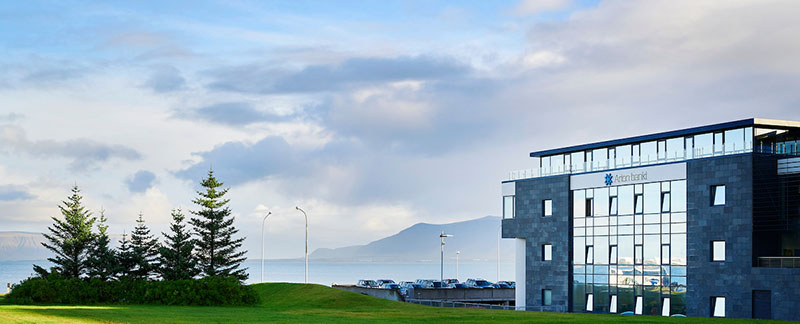
At a meeting this morning the Board of Directors of Arion Bank approved a new organizational structure for the Bank which will come into effect today. The organizational changes are part of the Bank’s effort to achieve its targets of a 50% cost-to-income ratio and return on equity exceeding 10%. The number of divisions will be reduced by two and the responsibility for various other tasks will be redistributed within the Bank with the aim of simplifying the business. There will now be three business segments: Retail Banking, Corporate & Investment Banking, and Markets. There will also be three support units: Finance, Information Technology, and Risk Management.
The aim of these changes is to make the Bank more competitive and to increase return on equity. The Bank’s core strategy remains unchanged, and Arion Bank will continue to provide comprehensive financial services to individuals, companies and investors and to be at the forefront of digital banking. The main change is that investment banking activities have been transferred into two new divisions, Markets, and Corporate & Investment Banking. The aim of Markets will be to refine the Bank’s focus within its securities business, while Corporate & Investment Bank will provide companies and institutions with a full range of financing and advisory services. The Bank will enhance its services to customers seeking the most cost-effective financing by acting as financial intermediary with third parties such as funds and other institutional investors.
These changes will result in a reduction in the number of employees of 12%, or approximately 100 people. 80% of these redundancies are at the Bank’s headquarters and 20% at its branches. The Icelandic Directorate of Labour has been informed of these redundancies.
Benedikt Gíslason, CEO of Arion Bank:
“The Bank’s strong capital and liquidity positions mean that Arion Bank is on a firm financial footing. However, it is clear that operating expenses are too high and that the Bank’s structure does not take current market conditions and the needs of the business sector sufficiently into account. The environment for financial institutions has undergone significant change over the past few years. Onerous changes to the regulatory framework and tax environment in recent decades have resulted in huge additional costs. It is a fact that capital requirements and taxes paid by banks in Iceland are far above the norm in our neighbouring countries and inhibit the ability of Icelandic banks to compete. At the same time competition on the financial market is becoming more intense, for example from the pension funds, state-owned banks, fintech companies and smaller financial institutions, which are in many respects subject to different standards than systemically important banks. As a result the Bank’s return on equity has for some time been unsatisfactory.
With the organizational changes being presented today we are responding to circumstances so that we can ensure that Arion Bank will continue to provide its customers with high-quality services and generate dividends for its shareholders. We are building upon the strong results achieved in recent years in digital services and automation and we fully intend to maintain our position as a leading provider of cutting-edge financial services.
It will be a difficult day as we say goodbye to capable and hardworking colleagues, who I am sure will go on to prosper in new surroundings.”
Executive Committee
The Executive Committee of Arion Bank comprises the following people: Benedikt Gíslason, CEO; Ásgeir H. Reykfjörð Gylfason, Deputy CEO and Managing Director of Corporate & Investment Banking; Iða Brá Benediktsdóttir, Managing Director of Retail Banking; Margrét Sveinsdóttir, Managing Director of Markets; Gísli S. Óttarsson, Chief Risk Officer; and Stefán Pétursson Chief Financial Officer. The position of Managing Director of Information Technology is to be advertised.
Lýður Þór Þorgeirsson and Rúnar Magni Jónsson are leaving the Executive Committee to take up new positions within Corporate & Investment Banking. Lýður Þór Þorgeirsson will become Head of Corporate Finance and Rúnar Magni Jónsson will become department head within Corporate Banking. Birna Hlín Káradóttir has been appointed as General Counsel and will manage Legal Services from the CEO’s Office.

Corporate & Investment Banking Ásgeir H. Reykfjörð Gylfason
Loans to larger companies and advisory services and other services relating to financing and corporate M&A. This new division combines services previously offered by Corporate Banking, Investment Banking, Legal and Credit Management.
Retail Banking Iða Brá Benediktsdóttir
Comprehensive financial services to retail customers and SMEs provided via branches throughout Iceland, the Call Centre, Arion Online Banking and the Arion App. In Retail Banking there is a strong focus on digital solutions and the opportunities presented by open banking. Corporate Solutions and Marketing will be transferred to Retail Banking, as will part of Legal.
Markets Margrét Sveinsdóttir
Markets comprises Capital Markets, Institutional Asset Management, Custody Services, Pension Funds Administration and Private Banking for HNWI, Corporates, Funds and Institutions. Capital Markets was formerly part of Investment Banking.
Finance Stefán Pétursson
Finance comprises Treasury, Funding, Accounting, Payroll, Procurement, Planning and Analysis, and Facilities and Property Management. Back Office and Foreclosure Assets are now joining the division.
Information Technology TBD
IT as before comprises Software Development, Technology Management and Project Office.
Risk Management Gísli S. Óttarsson
Risk Management will continue to perform credit control and assess balance sheet risk and operational risk.
CEO’s Office Benedikt Gíslason
Projects in the CEO’s Office will be scaled back. Human Resources, Communications and IR and Business Development will remain in the CEO's Office. Legal Services and the positions of General Counsel and Chief Economist will be added. The Research department will be discontinued, in line with MiFid II, and analysts will join different divisions. Marketing is now a part of Retail Banking, and Credit Management a part of Corporate & Investment Banking. The role of Customers’ Ombudsman will be discontinued.