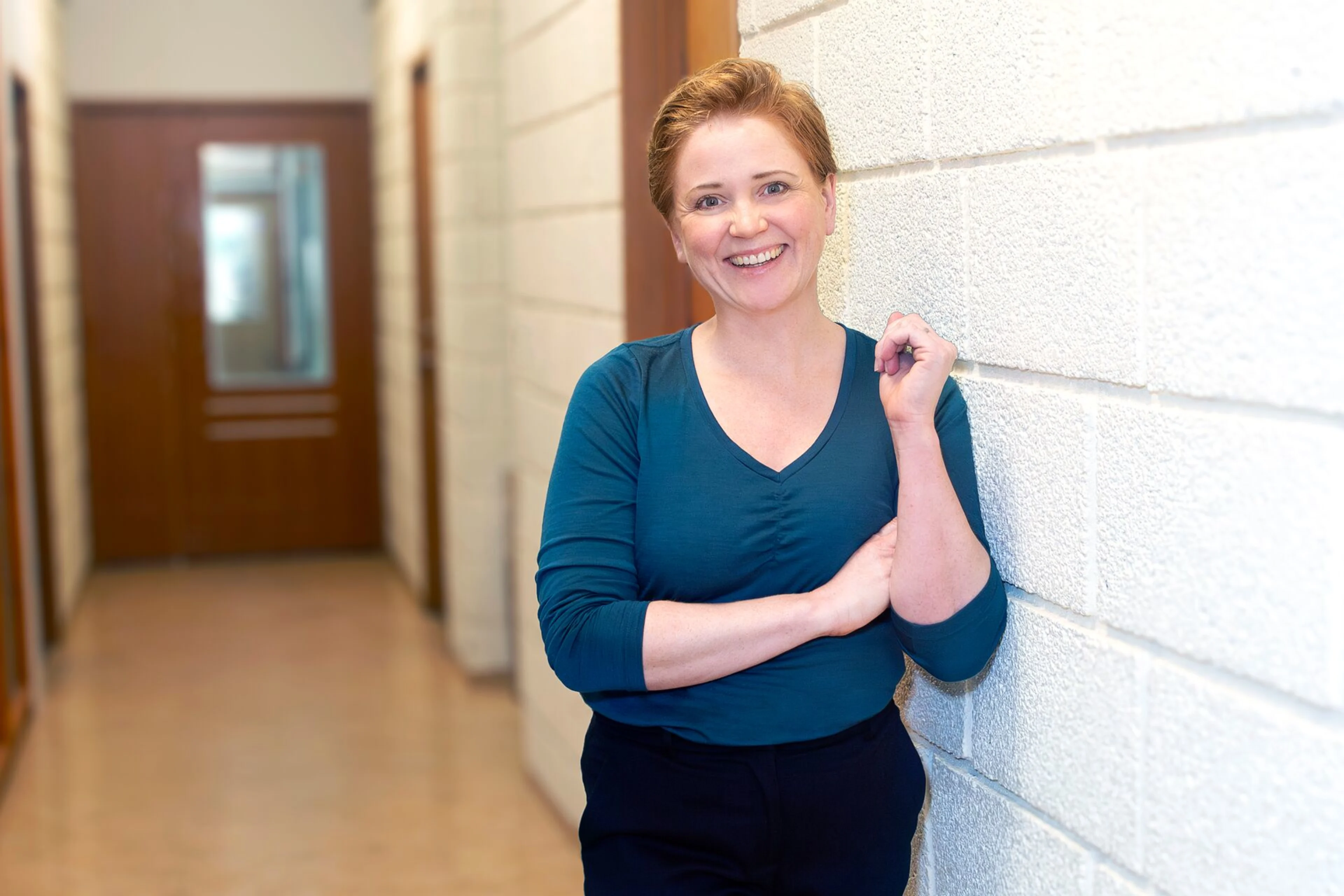
Helga Dögg Flosadóttir
We're Going to Save the World by
Revolutionizing the Ammonia Industry
Chatting with Helga Dögg Flosadóttir, founder and CEO of Atmonia, is not only informative and interesting but also truly inspiring. Hearing the passion behind her work and learning about the tremendous effort Helga Dögg has already put in provides inspiration on many levels. Helga Dögg pursued a doctorate in physical chemistry, and after completing her studies, she worked as a project manager at the Innovation Center Iceland.
"In the Faculty of Science at the University of Iceland, there are 3 women with professor positions out of 24 working professors."
Producing an Environmentally Friendly Energy Source
She says that support is crucial for everyone coming out of education, but it's especially important for young women in a traditionally male-dominated world. At the Innovation Center, she began researching ammonia production with Egill Skúlason, a professor at the University, and Arnar Sveinbjörnsson. Long story short, together they founded Atmonia, which is now researching and developing technology that will transform global ammonia production. There is growing awareness in society about the importance of ammonia, as it is one of the most produced chemicals in the world today, but its production is extremely environmentally unfriendly. Ammonia forms the foundation of food security worldwide, with 80% of ammonia produced today being used in fertilizers. Additionally, engines that can use ammonia as fuel are being developed, which multiplies the need for environmentally friendly ammonia production. Therefore, there is a dual driving force behind Helga Dögg's work and Atmonia: to revolutionize the production process itself and to produce an environmentally friendly energy source.
Outstanding Women in a Male-Dominated World
The world of science is in many ways a male-dominated one, but Helga says she didn't think much about that when she decided to pursue a science education. She says it was interesting that when she was in her undergraduate studies at the University of Iceland, they examined the gender ratio in chemistry and biochemistry, and that year the ratio was exactly 50/50. However, this changed when she reached doctoral studies, where she was often the only woman. She also mentions that while working at the Innovation Center Iceland, Þorsteinn Ingi Sigfússon, the former director, was especially supportive of her and made efforts to elevate women to equal standing with men in science.
When asked about the main obstacles she faced, she says that funding to keep startup operations going is always the biggest challenge, as well as team formation. Startups like Atmonia are built on specialized knowledge that not everyone possesses, and she says it's a challenging but enjoyable task to form the right team around her. In this regard, she tries to maintain gender balance among those working at the company. She has committed to inviting equal numbers of both genders for interviews when positions are advertised, and what she says stands out is how outstanding and capable the women are who apply for the advertised specialist positions. Helga says that being a woman and completing a doctorate in a field overflowing with men is in itself sufficient proof of one's abilities. She says that what characterizes all the women she has spoken with at Atmonia is tremendous ambition and perseverance.
Investments in Startups
But as mentioned above, the team is only one arm of a good company; the biggest project is the science and development, and to ensure their progress, funding must be secured. Atmonia has been successful in obtaining grants for its projects, and funds like the Technology Development Fund have been helpful. It is, however, really interesting to look at investments in startups from a gender perspective, as funds like Rannís and others have made efforts to award grants to genders in the same proportion as the applications received. In that respect, about 30% of allocations go to projects led by women or mixed teams. When it comes to venture capital funds, the proportion can drop below 2%.
In our conversation, Helga says there is a significant supply of projects and companies led by women or mixed teams, but for some reason, such projects are not receiving funding from investment funds on par with male teams. It is important to focus attention on this disparity so that it can be reversed.
"We will always be best at what we are interested in."
In her youth, Helga was encouraged to challenge herself, make mistakes, and learn from them, and she says this has shaped her thinking and self-belief throughout her life. This has led her to follow her own interests, which is precisely one of the pieces of advice Helga gives to other women on their journey.
Helga Dögg is one of those young women who is very interesting to follow and admire. She has fearlessly trodden the path of science and founded a startup that we believe will change the world.
We thank her sincerely for taking the time to talk with us and look forward to celebrating her next milestones with her.
Share article: